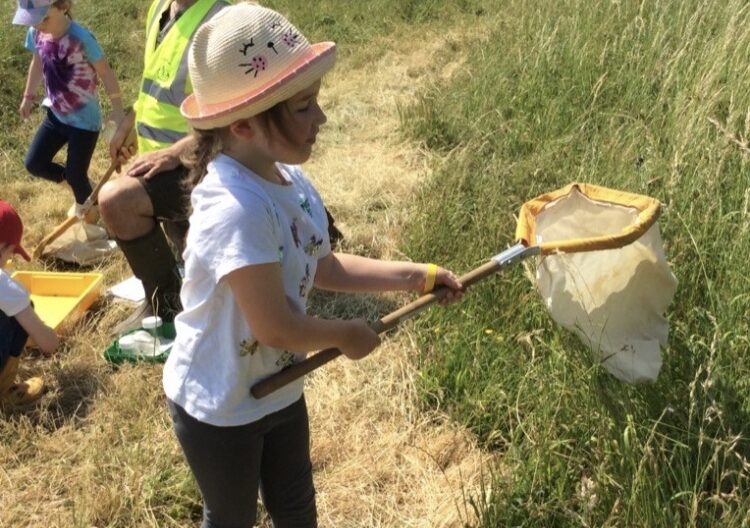
Explore two of Carymoor’s amazing habitats and discover more about the teeny tiny animals that live there!
We’ll find out:
- What minibeasts look like at different stages of their life cycle
- Similarities and differences between minibeasts fom different habitats
- Amazing ways that minibeasts survive in their habitats
- How to collect minibeasts in a gentle manner and understand why they should be returned to where they were found.
Depending on the time of year, we’ll either be hunting in the long grass of our meadow, under the logs in the woods or in and around our pond! As well as collecting, observing and classifying some marvellous minibeasts, we’ll also play some fun games to reinforce learning and make our own crazy creepy crawlies to take home, using clay and natural materials!
Please note: This day is only available from March – July
National Curriculum Links:
- EYFS Understanding the Natural World: Explore the natural world around them (exploring nature reserve); Know some similarities and differences between the natural world around them and contrasting environments (looking at minibeasts in different habitats).
- EYFS Expressive Arts and Design: Safely use and explore a variety of materials (making their clay creature)
- KS1 Science: Working scientifically: observing closely, using simple equipment; identifying and classifying (hunting and examining minibeasts)
- KS1 Science: Year 1 Animals, Including Humans: identify and name a variety of common animals; identify and name a variety of common animals that are carnivores, herbivores and omnivores (examining minibeasts); describe and compare the structure of a variety of common animals (examining minibeasts, playing inspect an insect)
- KS1 Art and Design: To use a range of materials creatively to design and make products (making camouflage caterpillars and clay creatures); To use drawing, painting and sculpture to develop and share their ideas, experiences and imagination (making clay creatures).