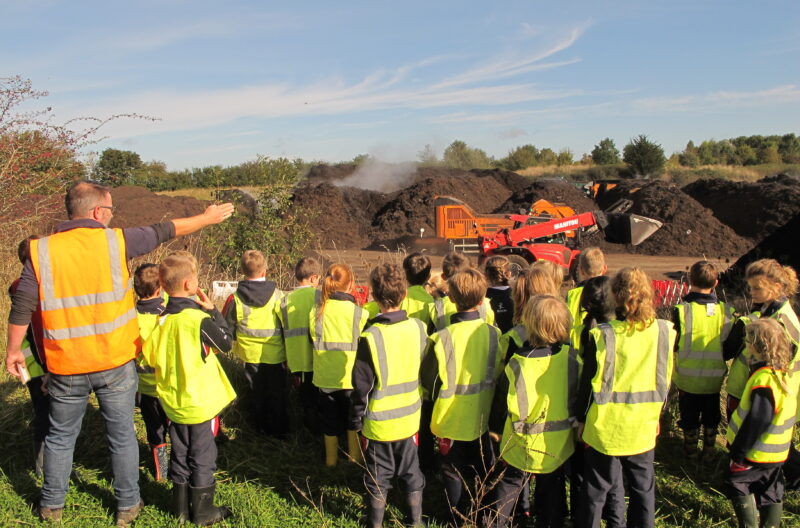
Based on a former landfill site, Carymoor is a great place to explore themes such as materials, human impact and changing environments, sustainability and the 3 Rs (Reduce, Reuse and Recycle). Discover how this site was used to dispose of waste for over 50 years, the impact of this on the local environment and how things have changed since the landfill closed in 2020. Plus find out how small actions can make a big difference for our planet if we all put the 3Rs into action!
The first half of your visit involves an eye-opening, interactive tour of the site, taking in:
- Waste Tunnel: Can you imagine what it’s like to tunnel through 40 years’ worth of waste?! Get up close to the rubbish thrown away in the past and find out why the 3 Rs are so important.
- Weighbridge and waste Transfer Station: See where your rubbish goes after it is collected from your home and find out what happens next on its journey to the Energy Recovery Facility at Avonmouth.
- Large-scale composting facility: Find out how garden waste is recycled with the help of some teeny-tiny creatures.
- Capped landfill: discover how the landfill has been transformed into a nature reserve and see how much wildlife you can spot!
The second half of your day will depend upon your year group:
- Year 3s & 4s can get crafty with old plastic bread bags to make fabulous kites to take home! Then (time allowing) we reinforce learning with some fun games linked to each of the 3Rs.
- Year 5s & 6s can also get crafty, using old magazines to make funky paper-bead wristbands to take home! Then (time allowing) we reinforce learning with some fun games linked to each of the 3 Rs. Alternatively, Year 5&6 can go on a ‘Waste Odyssey’, where they travel into the future to the year 2100 to see the impact that landfilling rubbish has had on the world. Then use detective skills to uncover the links between the types of rubbish thrown away and future environmental issues. What lessons can we learn from this?
National Curriculum Links:
- KS2 Science: Year 4 Living things and their habitats: recognise that environments can change and that this can sometimes pose dangers to living things. (site tour)
- KS2 Design and Technology: Make:select from and use a wider range of tools and equipment to perform practical tasks [for example, cutting, shaping, joining and finishing], accurately; select from and use a wider range of materials and components, including construction materials, textiles and ingredients, according to their functional properties and aesthetic qualities (making plastic bag kites and paper bead wristbands)
- KS2 PSHE (non-statutory): Community and responsibility: Caring for the Environment. (All activities)